
[ad_1]
Sponsored by Siemens.
Make knowledgeable design choices early on by quantifying thousands and thousands of architectures nearly
Structure evaluation, whether or not it’s a powertrain structure or a cooling system structure, ensures that the system architectures are aligned with desired necessities and that every one the chances are totally explored. It’s a vital side of Mannequin-Primarily based Methods Engineering, (MBSE), an strategy the place all necessities are captured and transformed right into a mannequin exhibiting the connection between perform and necessities. On this article, we are going to discover an structure evaluation method with generative engineering throughout the realm of MBSE. We may also showcase a case research of cooling structure evaluation for electrical autos (EVs) to reveal the sensible software of those methods.
The present cutting-edge in automotive structure choice typically entails a time-consuming and iterative technique of evaluating and refining ideas based mostly on previous experiences and knowledgeable judgment. This course of might be subjective, vulnerable to biases, and restricted by the information and experiences of the people concerned. It might additionally overlook sure trade-offs and system interactions that may considerably impression the general efficiency and effectivity of the automotive structure. As automotive methods change into extra advanced, interconnected, and technologically superior, there’s a rising want for a extra systematic and complete strategy to idea choice that goes past the constraints of the prevailing cutting-edge.
Producing concepts quicker and bringing merchandise to market extra shortly
Generative engineering is an iterative design and engineering course of that makes use of AI to generate outputs based mostly on a set of standards. It permits engineers to shortly iterate and choose the most effective design choices. It’s significantly worthwhile for fixing tough issues, similar to early architectural design explorations.
Generative Engineering in structure exploration is complemented by trade-off simulation & evaluation, which quantifies the advantages and disadvantages of architectural options, resulting in extra knowledgeable design choices. By creating digital fashions and subjecting them to simulated eventualities, engineers can assess system efficiency and different key attributes. Simulations allow the analysis of architectural options beneath numerous situations, offering a complete understanding of system habits.
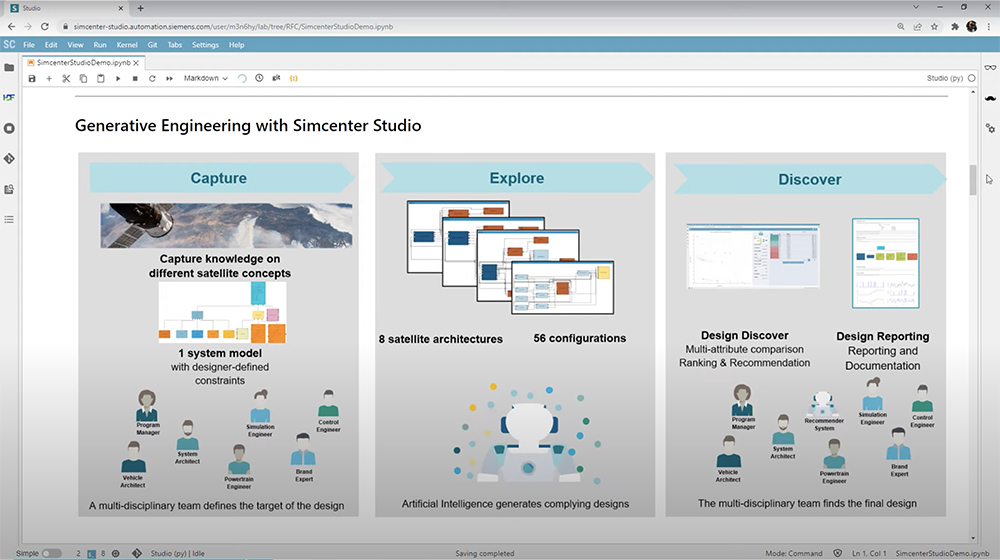
Simcenter Studio software program from Siemens gives generative engineering options that assist producers make a holistic evaluation of different system architectures. A workforce of specialists from a number of disciplines inside your group can work collectively to include a broad vary of necessities and tie them to simulation or check, to outline a system mannequin. From that central mannequin, the software program mechanically explores each doable different system structure, intelligently rating and selling them to make sure you make your choice from the most effective choices obtainable.
Generative engineering entails systematically producing and evaluating a variety of architectural options inside predefined constraints. This strategy encourages creativity and innovation by uncovering novel configurations that will not have been thought-about utilizing conventional strategies. Engineers can manually discover the design area or leverage automated algorithms to find optimum designs.
For extra info on how AI-driven MBSE will help to discover a actually revolutionary course on the very earliest levels of your design cycle, learn this weblog put up: MBSE pushed by AI – shake that design fixation!
Exploring different structure evaluation of cooling methods for an electrical automobile
Environment friendly cooling methods are very important to take care of optimum efficiency and forestall injury to delicate parts.
The automobile structure evaluation of inner combustion engines typically focuses on optimizing a single cooling goal, similar to sustaining a selected temperature vary for the engine. Nevertheless, for an electrified automobile, there are a number of parts that should be maintained at completely different temperatures. The cooling system now must serve many targets and aims. The engine nonetheless must be maintained at 95 C° however the lithium-ion battery is at round 35 C° and the electrical motor someplace within the center, round 65 C°. Embracing multi-objective optimization methods permits engineers to think about extra aims, similar to minimizing vitality consumption and decreasing system complexity.
Utilizing a model-based strategy, engineers can create a digital illustration of the electrical automobile and its cooling system in a system simulation software similar to Simcenter Amesim. This mannequin contains parameters similar to ambient temperature, battery temperature, weight, and value. By subjecting the mannequin to varied simulated driving eventualities, your engineers can consider completely different cooling architectures and assess their efficiency beneath completely different working situations.
Robotically evaluating EV cooling design options
At its core, generative engineering begins by capturing the necessities and constraints of a selected downside or system. These necessities might embrace elements like efficiency targets, security rules, materials limitations, or value targets. By inputting these parameters into the generative engineering framework, engineers create a design area that may be systematically explored.
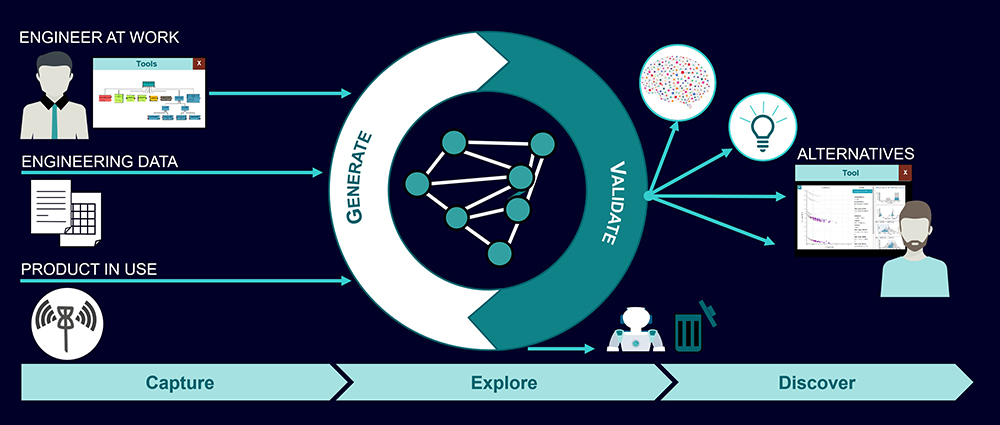
Utilizing superior algorithms, generative engineering generates a wide selection of design options that fulfill the required necessities. These designs are sometimes revolutionary and unconventional, stretching past the boundaries of what human designers would possibly conceive. By exploring this huge design area, engineers can uncover novel options that had been beforehand unknown or unexplored.
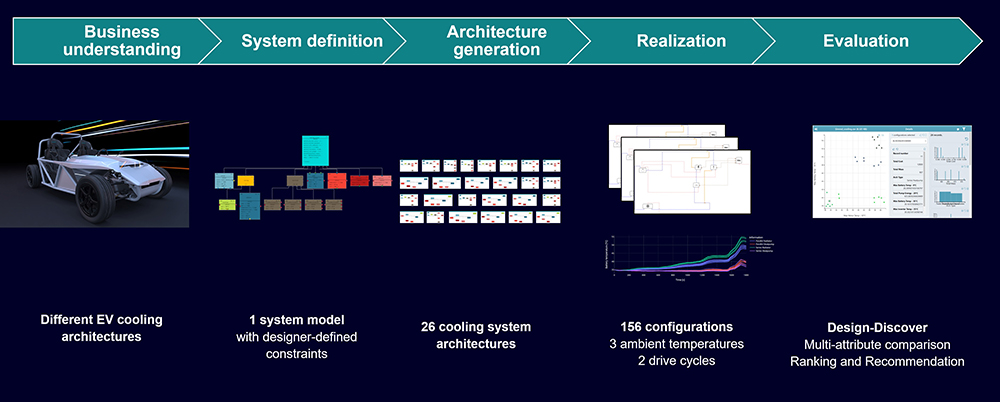
Simcenter Studio’s use of AI in generative engineering permits Siemens to design the thermal cooling system structure for the demonstrator electrical automobile, Simrod, which was optimized for energy consumption, value, and weight. This system leverages superior algorithms and computational fashions to discover an unlimited design area and determine optimum options.
With generative engineering we created quite a few designs that operated inside specified temperature limits whereas delivering environment friendly efficiency. By contemplating three completely different temperature eventualities and two drive cycles, this course of allows complete analysis and robustness evaluation.
By way of generative engineering, numerous design parameters similar to warmth exchanger configurations, coolant circulation charges, and fan placements are systematically explored and iterated upon. The algorithms intelligently generate and consider quite a few design options, optimizing for energy consumption, value, and weight concurrently.
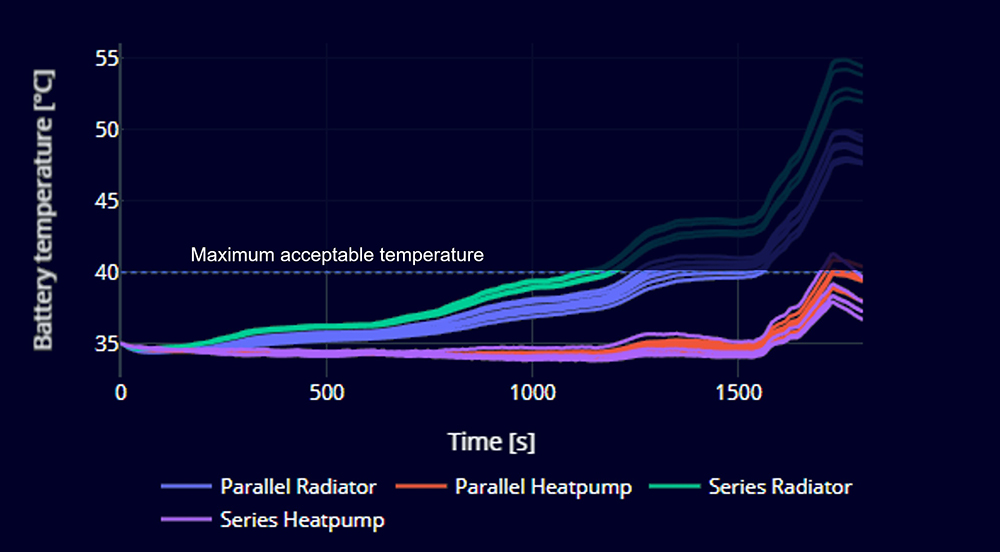
The ensuing thermal cooling system structure for the Simrod was in a position to obtain a fantastic stability between thermal efficiency and useful resource effectivity. It gives enhanced cooling capabilities, guaranteeing temperature management beneath completely different situations, whereas additionally minimizing energy utilization, decreasing prices, and sustaining a light-weight profile. Generative engineering allowed our engineers to effectively and successfully design a complicated thermal cooling system that met numerous necessities and outperformed conventional design approaches.
Learn how to take most benefit of AI-driven generative engineering
Generative AI is an unimaginable expertise, but it surely’s nonetheless only a expertise. To take most benefit of it, corporations have to rewire to allow them to quickly develop options, enhance their buyer expertise, speed up innovation, and scale back prices.
In case you expertise venture backlogs or want simulation functionality , you may companion with Simcenter Engineering and Consulting specialists to fulfill your distinctive wants. The workforce brings crucial experience to your course of with confirmed product design providers that tackle your most crucial improvement challenges.
In conclusion, different structure evaluation methods provide worthwhile enhancements to conventional strategies of feasibility evaluation and structure definition stage in Mannequin-based System Engineering. Embracing generative engineering and system simulation can considerably enhance the effectivity and effectiveness of the structure evaluation course of. By incorporating these approaches into the Mannequin-Primarily based Methods Engineering framework, engineers can optimize system efficiency, make knowledgeable design choices, and finally create strong methods that efficiently fulfill a number of aims a lot early within the improvement course of. These different methods foster innovation and elevate the general high quality of system design.
[ad_2]