
[ad_1]
Hyundai and Genesis are the newest automakers to achieve an settlement with Tesla to make use of its charging stations in North America in addition to undertake its proprietary charging connector, generally known as NACS (North American Charging Customary), for future electrical automobiles offered within the U.S. and Canada.
New or up to date Hyundai and Genesis EVs on sale within the U.S. from the fourth quarter of 2024 (first half of 2025 for Canada) will characteristic a built-in NACS connector as a substitute of the CCS1 connector Hyundai at the moment makes use of, the automaker stated on Thursday.
Hyundai and Genesis are a part of Hyundai Motor Group that additionally contains Kia. Kia is predicted to make its personal announcement shortly.
Homeowners of Hyundai and Genesis EVs with the CCS1 connector will nonetheless be capable to use Tesla’s charging stations, however would require an adapter that might be made accessible starting in early 2025. Hyundai and Genesis may even make adapters for house owners of automobiles with the NACS connector to allow them to make use of chargers with the CCS1 connector.
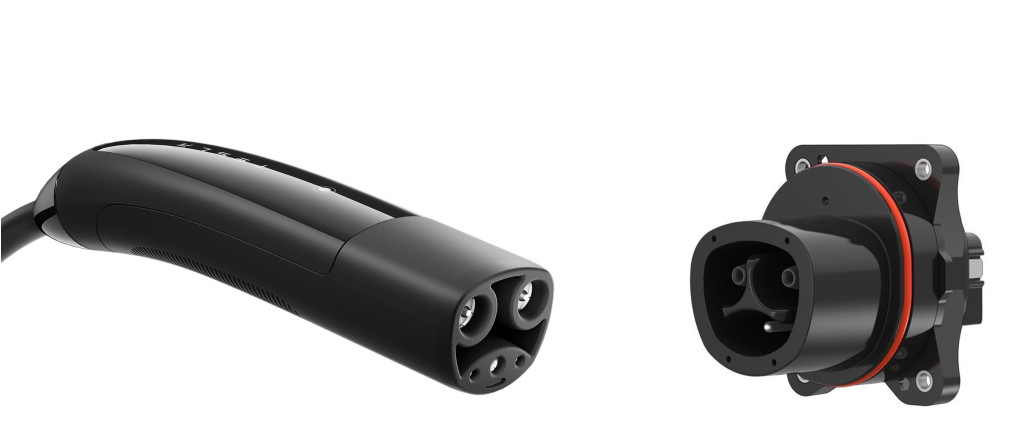
Tesla Supercharger connector – now referred to as NACS
The settlement will considerably improve the variety of DC quick chargers accessible to Hyundai and Genesis EV house owners. Tesla’s DC quick chargers quantity roughly 12,000 in North America, and at the moment symbolize about 60% of DC quick chargers within the U.S., in keeping with the Division of Power. Tesla began opening its charging stations to rival manufacturers following a deal made with the White Home in February.
Fisker, Ford, Honda (and Acura), Jaguar, Mercedes-Benz, Nissan, Polestar, Rivian, and Volvo have additionally made offers with Tesla to make use of its charging stations, and lots of of these firms have additionally introduced plans to undertake the NACS connector for his or her automobiles in North America. Stellantis and Volkswagen have indicated that they might additionally observe swimsuit.
Hyundai has additionally partnered with six different automakers to develop a separate community of charging stations spanning North America and containing at the very least 30,000 chargers. The primary of those charging stations will open within the U.S. in mid-2024.
[ad_2]